
Trending
This story is from June 9, 2013
No desi chilly chicken for Gurgaon’s expats
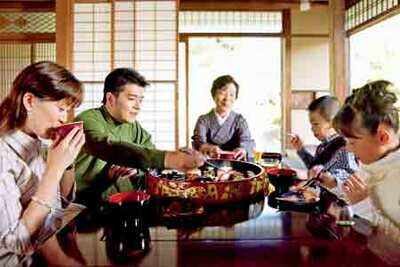
Chowmein out, raw fish in – with almost 95% of their clientele comprising expats, some pan-Asian restaurants in Gurgaon see no point in Indianizing their cuisine for the desi palette.
Chowmein out, raw fish in – with almost 95% of their clientele comprising expats, some pan-Asian restaurants in Gurgaon see no point in Indianizing their cuisine for the desi palette.
Most of us Indians claim to ‘lurrve’ pan-Asian food. But do we really? Well if the cuisine means chilly chicken and fried rice, then maybe, but definitely not if it means rice cakes in soup or a dish of steamed raw cuttlefish.
However, with the increasing number of Asian expats in Gurgaon, quite a few super-authentic Korean and Japanese restaurants have come up, that bring a taste of their home countries to the fast evolving corporate city.
These places don’t believe in Indianizing the cuisine, they prefer sticking to the original ingredients from their home countries, and make sure to give you a traditional feel, from their way of cooking, to even their way of serving – whether you like it or not.
When you climb the staircase to Gung, which is Korean for ‘the palace’, you feel like you’re in Korea itself. The restaurant, in Sector 29, has walls adorned with pictures of Suk Hee Kim, the head chef and also the mother of Korean owner, Kim Jin Bum, posing with Korean singers, actors, and even the South Korea president. Kim tells us, “My mother is the head chef, and at 62, I think there could have been no one better since she has been cooking for years now and knows all the popular Korean dishes really well.”
Upon entering the restaurant, you are greeted by waitresses, trained in Korean fashion. Unlike other restaurants that normally have tables for their guests, in Gung you see none of that.
With korean-only menu, staff, clientele – our ambience isn’t what an indian is looking for
Along the sides of the main centre are sliding doors that have a Korean seating arrangement, with ample leg space, a live grill in the middle of the table and a very private atmosphere. Each room comes with names like ‘Cloud’, ‘Sun’ and ‘Water’. “These are the names of the ten symbols of longevity or the ship-jangsaeng,” Kim explains.
Kim has been in India for over six years now and saw the increase in the number of Korean expats as well as a gap in the market for authentic Korean food, which is how he decided to open up a restaurant. He says, “I studied at Ramjas college, Delhi University, and while studying, I cooked a few dishes for my friends, who happened to like them a lot. I also realized that there is a lot in common between Indian and Korean food. Both are spicy and very flavourful. There was a gap in the market for authentic Korean food at that point, which is when I decided to open up a restaurant here in NCR. While the Green Park branch has more Indians visiting, the Gurgaon branch has a fair mix of both expats and locals.”
But Kim says that he doesn’t believe in changing the traditional flavours of the cuisine for someone’s palette. “Unlike Chinese food, Korean food cannot be ‘Indianized’. We have to maintain the true flavours and just hope that people like it. To keep up the authenticity, we source our meat like pork belly, tenderloin, and even some of the veggies, from Korea itself. Koreans want the taste of their home food, so it’s important the ingredients are genuine so that the taste is exactly the same. NRIs and Indians who have travelled abroad and tried our cuisine would know the difference too,” he says.
Nevertheless, some changes can be made when it comes to Indian clients, he adds, “When we have an Indian bunch of people visiting, we normally send our manager to talk to the guests and explain the menu to them. The manager will then recommend the vegetarians what options they have, and some dishes that can be made in chicken meat instead of pork or seafood for the chicken-eaters. Usually the youngsters are more experimental, while the older generation doesn’t like to try anything new, so we recommend something that’s not too drastic to them.” But among the Koreans, he says, the popular dishes are straight out of the menu – “Our octopus cakes, shellfish and pork gelbi are quite popular, and they all come with complimentary side dishes, which is the way Koreans like to be served. Also, unlike Indians, Koreans like to have their drinks along with the food, rather than prior to the meal.”
Daikichi
Situated in JMD, Regent Arcade, in the middle of the hustle bustle, is Daikichi, which can easily be mistaken for a mini-Tokyo. Tiny and dimly lit with lanterns, A4 size sheets pasted on the walls with the Japanese script on them, and Japanese clientele occupying the tables – chances are an Indian would feel slightly alienated in the whole ambience. Co-owner Anil Basotra tells us, “My Japanese partner, Yukionishmagi, who is a hotelier, and I started this restaurant together. Daikichi, meaning ‘excellent luck’, offers authentic Japanese cuisine. Almost 95% of our customers are Japanese and we only get Indians sometimes over the weekend. When we started the restaurant, we didn’t just plan on targeting the Japanese customers, but with the emergence of so many Japanese companies, like Hyundai, Samsung and Toyota, these expats working here long for the taste of their home. For the same purpose, we like to stick to the authenticity of the cuisine, and once in three months, we import our ingredients from Japan.” The restaurant also has an open kitchen. “The Japanese clients feel a sense of security if they know there food is being made by Japanese chefs, which obviously means that it’s authentic, but also because they feel like the freshest ingredients would be used,” says Anil’s brother, Sunil Basotra, who is also a co-owner. He further adds, “We have a Japanese couple, Takashi Sato and Junko Sato, as the head chefs. The waiting staff also speaks Japanese, for which they are trained before joining.”
About the sheets with Japanese symbols on the walls, Sunil says, “These are out-of-the menu dishes that we keep changing and in their tradition, these should be pasted around the walls.”
The main menu has English translations and you may see some familiar Indo-Chinese dishes like ‘Chinese-style fried rice’ but the owners say that this is more so for the Chinese clients who visit their restaurant. The friendly chef, who will come to your table and recommend dishes according to your tastes, can speak very few Hindi words, but manages to get your input on what you would like to eat, and makes sure to deliver what you have asked for.
About the restaurant’s most popular dishes, Anil says, “Yakitori, Katsu, Ramen and Udon are our most popular dishes and we cook them the same time as the order is given to us to maintain the freshness of the ingredients.”
Di Miso
While the first two restaurants don’t just cater ‘exclusively’ to expats but also focus on the Indian clientele, Di Miso, situated on the ground floor of the Global Foyer Building in Sector 43, is an all-out pan-Asian restaurant, serving Japanese, Korean and Chinese, with their sole focus being the Asian expat customers.
The entire menu is in Korean with no translated subheads and the only English you will see is the ‘closed’ sign on the door.
Di Miso, which is named after a type of traditional Japanese soup, has an entrance that is filled with shoes that the customers have taken off, owing to their meal traditions. The same concept of Gung, that of private rooms and low seating, is seen here and the expats are busy chatting up in their native language in a place that is much like home to them. There is an open live kitchen, the air is filled with the fragrance of pan-Asian food, and while an Indian would like to try a meal here, the menu and non-English, non-Hindi speaking staff makes it difficult to do so.
Sonam, a north-eastern Indian waitress who works there and speaks broken English, tells us that they don’t get Indians at all since their food is ‘extremely traditional’ and that none of the staff members, as well as the owners can speak proper Hindi or English, but are trained to speak Korean. She also adds, “We feel that the expats don’t like local people coming here, since it is like their private time and they like to remain among themselves. I know a bit of English, so I can explain some dishes to Indians but they usually don’t understand the food. Once or twice, we get someone who has been to Korea, so he or she wants to try a dish or two. Our restaurant is full of Koreans so I don’t think it’s the ambience that an Indian is looking for to have a meal in.”
Korean co-owner, H Park, further adds, “Indians don’t like the food which we serve, like raw fish. When they come here, they usually ask for fried rice, noodles and barbecue chicken. Also, Korean food is too spicy for Indians.”
Most of us Indians claim to ‘lurrve’ pan-Asian food. But do we really? Well if the cuisine means chilly chicken and fried rice, then maybe, but definitely not if it means rice cakes in soup or a dish of steamed raw cuttlefish.
However, with the increasing number of Asian expats in Gurgaon, quite a few super-authentic Korean and Japanese restaurants have come up, that bring a taste of their home countries to the fast evolving corporate city.
These places don’t believe in Indianizing the cuisine, they prefer sticking to the original ingredients from their home countries, and make sure to give you a traditional feel, from their way of cooking, to even their way of serving – whether you like it or not.
Gung (the Palace)
When you climb the staircase to Gung, which is Korean for ‘the palace’, you feel like you’re in Korea itself. The restaurant, in Sector 29, has walls adorned with pictures of Suk Hee Kim, the head chef and also the mother of Korean owner, Kim Jin Bum, posing with Korean singers, actors, and even the South Korea president. Kim tells us, “My mother is the head chef, and at 62, I think there could have been no one better since she has been cooking for years now and knows all the popular Korean dishes really well.”
Upon entering the restaurant, you are greeted by waitresses, trained in Korean fashion. Unlike other restaurants that normally have tables for their guests, in Gung you see none of that.
With korean-only menu, staff, clientele – our ambience isn’t what an indian is looking for
Along the sides of the main centre are sliding doors that have a Korean seating arrangement, with ample leg space, a live grill in the middle of the table and a very private atmosphere. Each room comes with names like ‘Cloud’, ‘Sun’ and ‘Water’. “These are the names of the ten symbols of longevity or the ship-jangsaeng,” Kim explains.
Kim has been in India for over six years now and saw the increase in the number of Korean expats as well as a gap in the market for authentic Korean food, which is how he decided to open up a restaurant. He says, “I studied at Ramjas college, Delhi University, and while studying, I cooked a few dishes for my friends, who happened to like them a lot. I also realized that there is a lot in common between Indian and Korean food. Both are spicy and very flavourful. There was a gap in the market for authentic Korean food at that point, which is when I decided to open up a restaurant here in NCR. While the Green Park branch has more Indians visiting, the Gurgaon branch has a fair mix of both expats and locals.”
But Kim says that he doesn’t believe in changing the traditional flavours of the cuisine for someone’s palette. “Unlike Chinese food, Korean food cannot be ‘Indianized’. We have to maintain the true flavours and just hope that people like it. To keep up the authenticity, we source our meat like pork belly, tenderloin, and even some of the veggies, from Korea itself. Koreans want the taste of their home food, so it’s important the ingredients are genuine so that the taste is exactly the same. NRIs and Indians who have travelled abroad and tried our cuisine would know the difference too,” he says.
Nevertheless, some changes can be made when it comes to Indian clients, he adds, “When we have an Indian bunch of people visiting, we normally send our manager to talk to the guests and explain the menu to them. The manager will then recommend the vegetarians what options they have, and some dishes that can be made in chicken meat instead of pork or seafood for the chicken-eaters. Usually the youngsters are more experimental, while the older generation doesn’t like to try anything new, so we recommend something that’s not too drastic to them.” But among the Koreans, he says, the popular dishes are straight out of the menu – “Our octopus cakes, shellfish and pork gelbi are quite popular, and they all come with complimentary side dishes, which is the way Koreans like to be served. Also, unlike Indians, Koreans like to have their drinks along with the food, rather than prior to the meal.”
Daikichi
Situated in JMD, Regent Arcade, in the middle of the hustle bustle, is Daikichi, which can easily be mistaken for a mini-Tokyo. Tiny and dimly lit with lanterns, A4 size sheets pasted on the walls with the Japanese script on them, and Japanese clientele occupying the tables – chances are an Indian would feel slightly alienated in the whole ambience. Co-owner Anil Basotra tells us, “My Japanese partner, Yukionishmagi, who is a hotelier, and I started this restaurant together. Daikichi, meaning ‘excellent luck’, offers authentic Japanese cuisine. Almost 95% of our customers are Japanese and we only get Indians sometimes over the weekend. When we started the restaurant, we didn’t just plan on targeting the Japanese customers, but with the emergence of so many Japanese companies, like Hyundai, Samsung and Toyota, these expats working here long for the taste of their home. For the same purpose, we like to stick to the authenticity of the cuisine, and once in three months, we import our ingredients from Japan.” The restaurant also has an open kitchen. “The Japanese clients feel a sense of security if they know there food is being made by Japanese chefs, which obviously means that it’s authentic, but also because they feel like the freshest ingredients would be used,” says Anil’s brother, Sunil Basotra, who is also a co-owner. He further adds, “We have a Japanese couple, Takashi Sato and Junko Sato, as the head chefs. The waiting staff also speaks Japanese, for which they are trained before joining.”
About the sheets with Japanese symbols on the walls, Sunil says, “These are out-of-the menu dishes that we keep changing and in their tradition, these should be pasted around the walls.”
The main menu has English translations and you may see some familiar Indo-Chinese dishes like ‘Chinese-style fried rice’ but the owners say that this is more so for the Chinese clients who visit their restaurant. The friendly chef, who will come to your table and recommend dishes according to your tastes, can speak very few Hindi words, but manages to get your input on what you would like to eat, and makes sure to deliver what you have asked for.
About the restaurant’s most popular dishes, Anil says, “Yakitori, Katsu, Ramen and Udon are our most popular dishes and we cook them the same time as the order is given to us to maintain the freshness of the ingredients.”
Di Miso
While the first two restaurants don’t just cater ‘exclusively’ to expats but also focus on the Indian clientele, Di Miso, situated on the ground floor of the Global Foyer Building in Sector 43, is an all-out pan-Asian restaurant, serving Japanese, Korean and Chinese, with their sole focus being the Asian expat customers.
The entire menu is in Korean with no translated subheads and the only English you will see is the ‘closed’ sign on the door.
Di Miso, which is named after a type of traditional Japanese soup, has an entrance that is filled with shoes that the customers have taken off, owing to their meal traditions. The same concept of Gung, that of private rooms and low seating, is seen here and the expats are busy chatting up in their native language in a place that is much like home to them. There is an open live kitchen, the air is filled with the fragrance of pan-Asian food, and while an Indian would like to try a meal here, the menu and non-English, non-Hindi speaking staff makes it difficult to do so.
Sonam, a north-eastern Indian waitress who works there and speaks broken English, tells us that they don’t get Indians at all since their food is ‘extremely traditional’ and that none of the staff members, as well as the owners can speak proper Hindi or English, but are trained to speak Korean. She also adds, “We feel that the expats don’t like local people coming here, since it is like their private time and they like to remain among themselves. I know a bit of English, so I can explain some dishes to Indians but they usually don’t understand the food. Once or twice, we get someone who has been to Korea, so he or she wants to try a dish or two. Our restaurant is full of Koreans so I don’t think it’s the ambience that an Indian is looking for to have a meal in.”
Korean co-owner, H Park, further adds, “Indians don’t like the food which we serve, like raw fish. When they come here, they usually ask for fried rice, noodles and barbecue chicken. Also, Korean food is too spicy for Indians.”
End of Article
FOLLOW US ON SOCIAL MEDIA









Photostories
lifestyle videos

Featured In Lifestyle
Popular Categories
Entertainment NewsBollywood NewsTollywood NewsKollywood NewsMollywood NewsMovie ReviewsLatest Hindi MoviesLatest Tamil MoviesMX PlayerParenting TipsHome RemediesWeight LossBeauty TipsParenting TipsHindi VideosHindi Video SongsBhojpuri Music VideosLatest Telugu MoviesBhojpuri Music VideoHindi TV News
Trending in Entertainment
Latest MoviesBollywood MoviesHollywood MoviesTamil Movies 2024Telugu Movies 2024Malayalam Movies 2024Kannada Movies 2024Marathi Movies 2024Bengali Movies 2024Top Rated Movies 2024Best Hindi MoviesBest English MoviesBest Telugu MoviesBest Tamil MoviesBest Malayalam MoviesBest Kannada MoviesBest Bengali MoviesUpcoming Hindi MoviesBest Movies Of All TimeBest Hindi Movies of All Time
Trending in Etimes
Horoscope TodayNumerology Predictions TodayDinner With TrumpTim WalzIvanka TrumpJose LopezKristina JoksimovicJoe WilsonTrump Eating The Dogs SongGermany NewsKamala HarrisPrince HarryPatriot Day 2024Diabetes RiskHappy Mindfulness Day 2024Trump Vs HarrisJoe JonasPositive Thinking Day 2024Dave Bautista
Trending in TV
Trending in Lifestyle
Trending in Regional
Movie Reviews
Berlin ReviewThe Buckingham Murders ReviewSpeak No Evil ReviewVisfot ReviewThalapathy Is The G.O.A.T ReviewRebel Ridge ReviewDetective Conan vs. Kid the Phantom Thief ReviewBeetlejuice Beetlejuice ReviewPad Gaye Pange ReviewA Wedding Story ReviewThe Diary Of West Bengal ReviewTikdam ReviewKinds Of Kindness ReviewAfraid Review
Upcoming Hindi Movies
Latest News
Kaun Banega Crorepati 16: Can you guess the answer for this Rs 3,20,000 question on Navy, which contestant Naman Jain incorrectly answered?Edible oil import duty hiked by 20%'Calling all Swifties for Trump': Donald's new campaign merch imitates Eras Tour shirtsWWE Hall of Famer Watches 15 Hours Of Wrestling Each WeekDallas Cowboys Set to Defend AT&T Stadium in Week 2 Clash with New Orleans SaintsTovino on training for Kalaripayattu in ‘ARM’: I practiced every single day, even if I had a hectic day on set8 animals that reproduce without matingDelhi Police Files FIR for Firecracker Celebration Outside CM Kejriwal's ResidenceThrowback: When Alia Bhatt responded to insecurity questions about Ranbir Kapoor, shut down gossipIndia's T20I captain Suryakumar Yadav turns 34: A glimpse into his stellar T20 careerThe 3 Strongest Zodiac Signs: Powerhouses of the Zodiac Wheel'Forgive me, I don't belong ...' : Tamil Nadu hotelier's apology to FM Nirmala Sitharaman over GST remark triggers political rowRakul Preet Singh reveals Bollywood stylists charge from Rs 15000 to Rs 1 lakh for one event, one outfit: 'Living in Mumbai requires a lot of PR'September 14, 2024: Flying creatures and how their wings workThrashed for 'molesting' kid on train, rail staffer diesKejriwal walks out of jail, says morale is up by 100 timesDhruv Kapila's health setback shatters Indian pair's Vietnam Open semifinal hopesFormer Titans Cheerleader Danielle Sekelsky Begins WWE NXT Training
Copyright © 2024 Bennett, Coleman & Co. Ltd. All rights reserved. For reprint rights: Times Syndication Service